

How energy efficiency project failure is undermining long-term savings
Energy efficiency projects are rarely approved lightly. They are supported by business cases, justified with data, and positioned as sensible, low-regret investments. To add to this, the technology is proven, the savings are modelled, and payback periods are agreed. And yet, energy efficiency project failure is far more common than many businesses are willing to admit.
Months or years after implementation, expected savings are harder to evidence. Performance drifts and confidence quietly erodes. Not because the technology failed, but because the conditions required for those savings to endure were never actively tracked.
Energy efficiency project failure is rarely technical
When efficiency initiatives underperform, the first instinct is often to question the solution itself. Was it installed correctly? Are controls configured properly? Is the equipment operating as designed?
Occasionally, technical issues exist. More often, the technology is doing exactly what it was designed to do. The real cause of energy efficiency project failure usually sits outside the factory floor. It sits in how the project interacts with day-to-day operations once the implementation phase has ended.
The gap between project delivery and operational reality
Efficiency projects tend to have a clear start and end point. Operational energy use does not. Once a project is signed off, ownership often becomes diffused. The team that approved the investment moves on. Operations inherit new equipment, controls, or processes without always inheriting the assumptions that underpinned the original savings model.
Setpoints are adjusted, overrides become routine, and production priorities take precedence. Each of these decisions is reasonable in isolation.
Over time, however, the operating conditions required to sustain savings quietly disappear. Energy efficiency project failure does not arrive suddenly; it emerges gradually, through normal operational behaviour.
When successful projects create new problems
These issues are easier to recognise when they are grounded in real operational scenarios.
Consider a manufacturing site that invests in a compressed air optimisation project. Leaks are fixed, controls are upgraded, and energy consumption drops as expected. Six months later, production increases and new lines are added. The compressed air system is pushed harder, overrides become routine, and the original savings erode. The project delivered exactly what it promised, but the operating conditions it relied on no longer exist.
Or take a site that installs high-efficiency motors and variable speed drives across a production process. Energy use falls, but demand patterns change. Peak demand shifts into more expensive periods and capacity-related charges rise. Energy efficiency improves, yet total energy costs remain stubbornly high. From the board’s perspective, the project has failed. In reality, the commercial and operational implications were never revisited.
A similar pattern appears with lighting upgrades. LED installations often deliver immediate reductions in consumption, but over time, operating hours increase, controls are bypassed, and lighting loads creep back up. The technology performs as designed, but behaviour quietly undermines the original business case.
In each of these cases, energy efficiency project failure is not caused by poor engineering or bad intent. It emerges because the project is treated as complete, while the business continues to evolve.
Measurement ends too early
Many efficiency projects are measured at the point of delivery. Equipment is installed, performance is tested, and savings are signed off.
What is far less common is sustained measurement of whether those savings continue under real operating conditions. Without ongoing visibility, performance drift goes unnoticed and small deviations accumulate. By the time results are questioned, the original baseline is no longer trusted, and accountability has faded.
At that point, confidence in efficiency as a strategic lever starts to weaken.
Why this sits at the operational layer of an energy strategy
Energy efficiency lives squarely within the operational layer of an energy strategy. Its success depends on people, processes, and priorities remaining aligned long after the initial project team has stepped away. Without that alignment, even well-designed initiatives struggle to deliver durable results.
This is not a failure of intent or capability. It is a failure of integration. Treating efficiency as a one-off intervention rather than a managed operational capability almost guarantees energy efficiency project failure over time.
Making efficiency improvements stick
Businesses that avoid repeated efficiency failures approach the problem differently. They extend ownership beyond project completion. They link performance to operational decision-making. They monitor outcomes, not just installations. And they understand how changes in energy use interact with technical constraints and commercial structures.
In that context, efficiency stops being a temporary saving and becomes part of how the business operates.
If you want clarity on whether your efficiency initiatives are strengthening your energy position or quietly creating new exposure, an Energy Exposure Assessment can help.
Connect with us
More energy management insight from EnergyIntel

Energy Security 2026: Managing Energy Market Risk
Energy Security in 2026: What Businesses Can Control in a Volatile Energy Market Geopolitical instability, volatile gas markets and structurally high UK electricity costs [...]

How a foil manufacturer uncovered £4 million in energy savings
How one foil manufacturer put £4 million back into the business The way energy is bought, managed and accounted for can have a significant impact on operating costs, [...]

How hidden energy costs led to £3 million of savings for one UK glass recycler
How One Glass Recycler Turned Hidden Energy Costs Into £3 Million of Savings Most businesses assume they're paying the right amount for their energy. It's one of those [...]

How one manufacturer turned energy into a Board-Level KPI
EMaaS in Action: How One Manufacturer Turned Energy Into a Board-Level KPI Every manufacturer knows energy is a significant operational cost, but understanding where it's really being used [...]

What energy monitoring for energy-intensive businesses must deliver in 2026
Energy monitoring for energy-intensive businesses and what it must deliver in 2026 Energy monitoring for energy-intensive businesses is no longer simply about tracking consumption. [...]
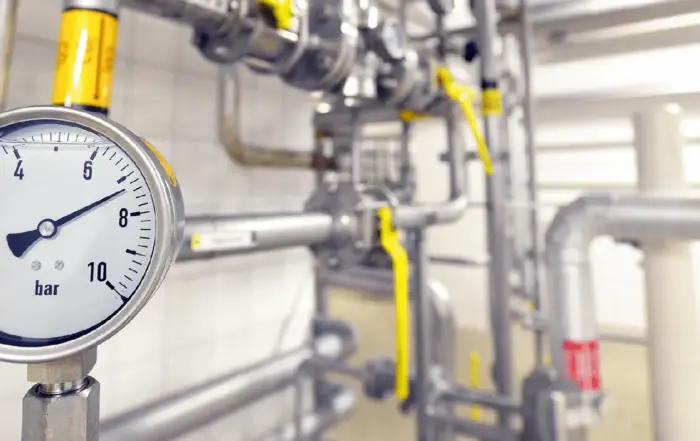
Why energy efficiency project failure is more common than expected
How energy efficiency project failure is undermining long-term savings Energy efficiency projects are rarely approved lightly. They are supported by business cases, justified with [...]