

The Hidden Technical Energy Exposures Increasing Your Energy Costs in 2026
A growing proportion of energy cost exposure is no longer driven by what you use or when you use it. Instead, it is being shaped much earlier by technical energy exposure: the structural decisions that quietly determine how energy enters your business, how it is measured, and how it is charged.
These exposures rarely appear in board papers. They don’t trigger alarms. And yet, they can materially erode margins year after year.
Where technical energy exposure really begins
There are three layers of a resilient energy strategy:
Most business leaders focus their attention on the commercial layer. Some invest in operational initiatives. But the technical layer is often assumed to be “already sorted”, and this assumption is increasingly expensive.
The false comfort of “we have a contract”
Energy procurement is often treated as the primary control mechanism for cost. Secure a competitive unit rate, lock in certainty, and the problem feels managed.
In reality, procurement sits within just one layer of a wider energy strategy, the commercial layer. It is downstream of a series of technical assumptions that are often years old and rarely revisited.
By the time a contract is signed, a significant share of cost exposure has already been fixed. This is what we mean by technical exposure. It isn’t about engineering projects or capital works, but the structural conditions that determine how your energy costs behave regardless of market movement or buying strategy.
What technical energy exposure really means
At its simplest, technical exposure is about how energy physically and contractually enters your business. It includes:
These are not decisions most boards consciously make. They are inherited, assumed to be “correct”, and left untouched unless something breaks. The issue is not that these arrangements were wrong when they were put in place. It’s that the business has often changed, while the technical configuration has not.
The technical issues businesses rarely revisit
Across energy-intensive businesses, the same patterns appear repeatedly.
Capacity and kVA settings are frequently based on historic demand rather than current operational reality. Sites evolve, processes change, and loads smooth out, but capacity charges continue to reflect peak demand from years ago.
Metering and data configurations can distort the way demand is recorded, inflating apparent peaks or misrepresenting actual usage patterns. This directly affects how costs are calculated, not just how they are reported.
Network arrangements often lock businesses into charging methodologies that are no longer optimal for how the site operates today. These decisions sit beneath the commodity price, quietly shaping the cost base month after month.
None of these issues cause obvious failure. They simply compound cost in the background.
Why these exposures matter more in 2026
In the past, inefficient technical configurations could hide behind falling wholesale prices or generous margins. That cushion no longer exists. In 2026:
Technical exposure is becoming harder to ignore because it directly undermines predictability, the very thing leaders now value most in a robust energy strategy.
The commercial impact leaders actually feel
While the causes are technical, the consequences are not. Unchecked technical exposure leads to:
From a finance perspective, this is particularly damaging. Costs appear uncontrollable, yet no clear corrective action is visible.
What a good energy strategy looks like when technical energy exposure is managed
Strong businesses treat the technical layer of their energy strategy as foundational, not a one-off exercise. That means:
This is not about optimisation for its own sake. It is about ensuring that the cost base you are managing is actually the one you think it is.
The strategic takeaway
Many of the most expensive energy risks are not driven by markets or procurement decisions. They are embedded in technical assumptions that no one has challenged for years. If you cannot see them, you cannot manage them, and by 2026, the cost of that invisibility is rising.
A resilient energy strategy starts with understanding how energy enters your business. Only then can operational discipline and commercial strategy deliver the outcomes leaders expect.
This article looks at just one part of a resilient energy strategy: the technical layer. In practice, technical exposure is closely linked to operational behaviour and commercial decisions.
Our Energy Exposure Assessment uses the Three Layers framework to help leadership teams understand where they are most exposed and what actions will deliver real value. If you want a clearer view of your energy exposure and priorities, you can schedule an Energy Exposure Assessment with our team.
For leadership teams seeking a clearer, more robust view of energy exposure and priorities, our Energy Exposure Assessment provides that insight.
Connect with us
More technical exposure insight from EnergyIntel

Energy Security 2026: Managing Energy Market Risk
Energy Security in 2026: What Businesses Can Control in a Volatile Energy Market Geopolitical instability, volatile gas markets and structurally high UK electricity costs [...]

How a foil manufacturer uncovered £4 million in energy savings
How one foil manufacturer put £4 million back into the business The way energy is bought, managed and accounted for can have a significant impact on operating costs, [...]

How hidden energy costs led to £3 million of savings for one UK glass recycler
How One Glass Recycler Turned Hidden Energy Costs Into £3 Million of Savings Most businesses assume they're paying the right amount for their energy. It's one of those [...]
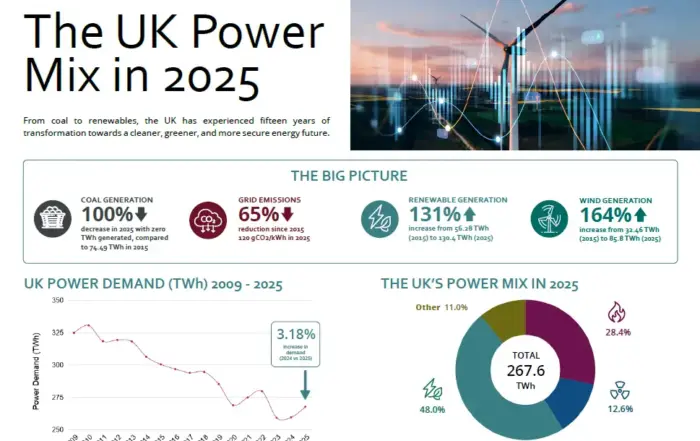
UK Power Generation Mix in 2025
The UK Power Mix in 2025 How the UK’s electricity system has been transformed Over the past 15 years, the UK electricity system has undergone one of the fastest [...]

Technical Energy Cost Structures and Their Impact on Energy Strategy
How Technical Energy Cost Structures Are Redefining Energy Strategy When boards turn their attention to energy, the conversation almost always begins in the same [...]

Why energy procurement risk is no longer just a cost decision
Why energy procurement risk is no longer just a procurement issue For many senior leaders, energy still appears in the P&L as a cost [...]